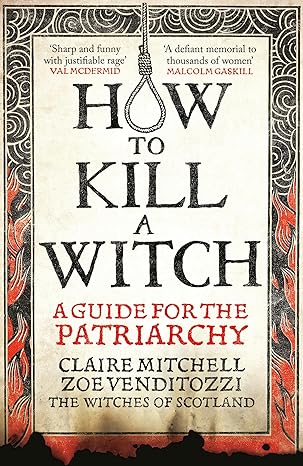
This combines a well-researched history of Scotland’s witch trials with fictional accounts of the human stories behind the trials. Written with a lot of necessarily black humour, as the full title suggests, there’s a strong focus on the evils of the patriarchy.
The book draws a lot on James VI’s book Demonology. I’d known about James’s book and my assumption was that this was something of an academic tome, but the book shows Demonology was a practical text-book on witch-hunting based on James’s direct participation in the investigation, torture and trials of witches. In exploring the subject, the authors of How to Kill a Witch ironically follow the same sequence that James used in his book.
Something else new to me that I got from the book was that witch trials in Scotland were in fact generally a state-sanctioned process needing a commission from the Privy Council to begin an investigation and with trials often conducted by judges of the Court of Session. So Pittenweemers can draw some comfort that the burgh’s witch persecution notoriety can’t just be blamed on the superstitions of locals.
Much of the book is given to recounting individual cases of those accused in Scotland, what they had to go through and the reasons for the bias against women. And the book makes a telling comparison between Scotland and Salem, where within decades the injustice of the executions in 1692 had been recognised by the government; Salem is also a warning on witch-related tourism – a town the size of Kirkcaldy, it gets 100,000 visitors every Halloween and two million a year.
A good read – but not for the faint-hearted.
[We have a copy of How to Kill a Witch in the library]